LKY upsizes exploration program on US rare earths and antimony project
Our Investment Locksley Resources (ASX: LKY) just committed to upsizing exploration works at its US rare earths and antimony project.
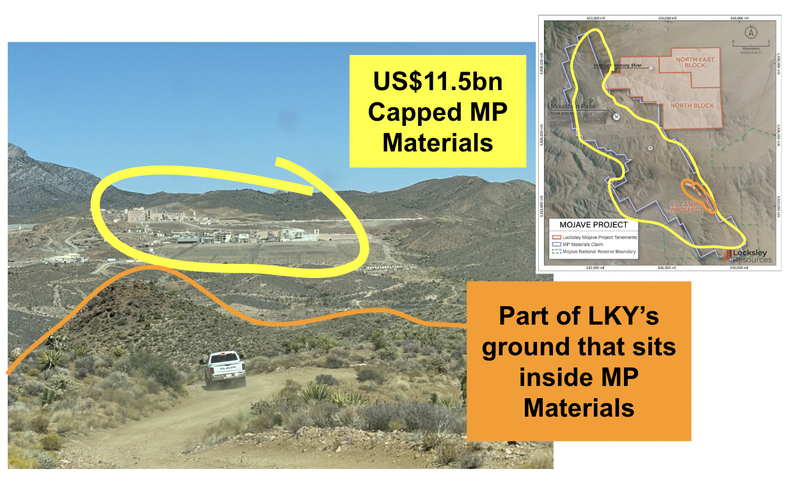
LKY holds ground in and around $17BN MP Materials’ Mountain Pass mine in California.
MP’s project is the only rare earth producing mine in the USA - and is probably the most famous mining asset in the world right now after:
- Having the Pentagon Invest $400M directly into MP Materials, and
- Apple (yes tech giant, Apple) doing a US$600M offtake deal with the company.
Last week LKY doubled the size of its project area picking up new ground adjacent to its existing blocks. (We covered that news last week here)
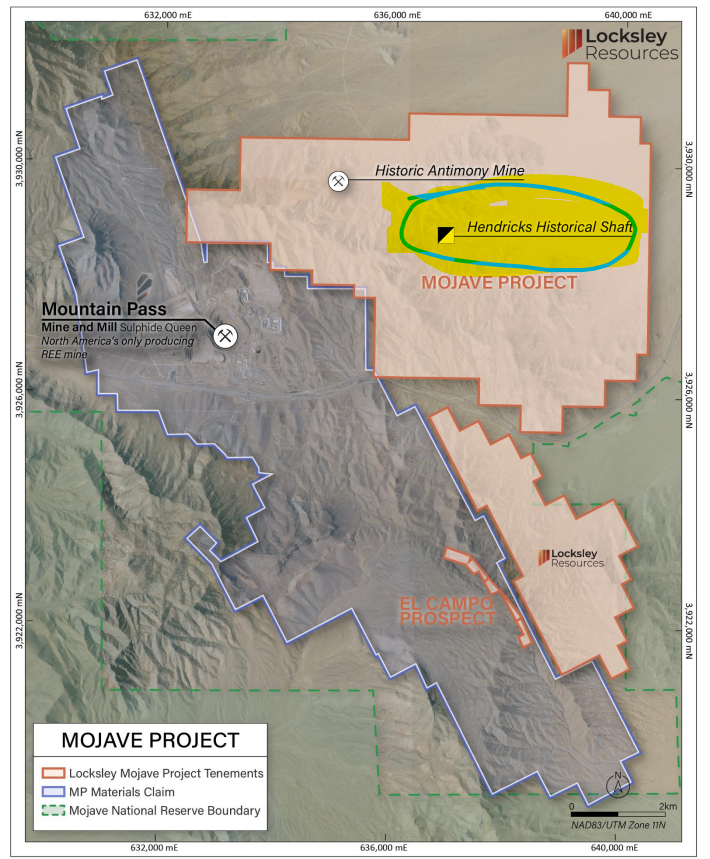
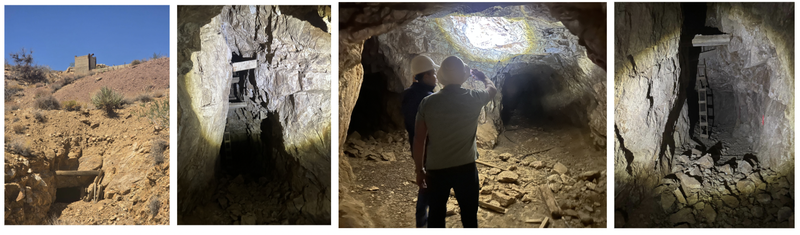
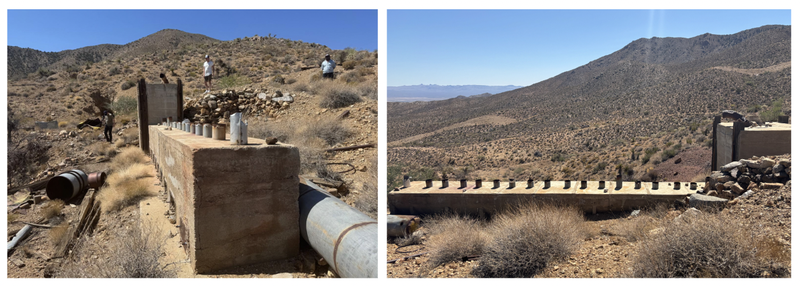
And now while doing some mapping work discovered an historic mine shaft where old timers have mined to depths of at least ~15m underground.
Here is that new shaft from surface and here are pictures of the shaft extending underground:
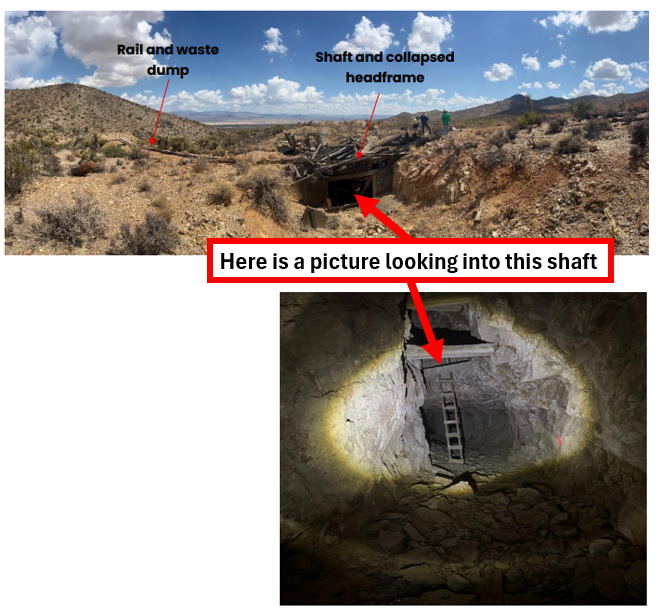
LKY confirmed in today’s announcement that “grab samples” (rock chip samples) had been taken from in and around this area now to see what the old timers were mining in the shaft.
Those results will definitely be interesting to see.
And after those results come back we expect to see LKY expand its exploration programs out to this part of its project (assuming the results are good).
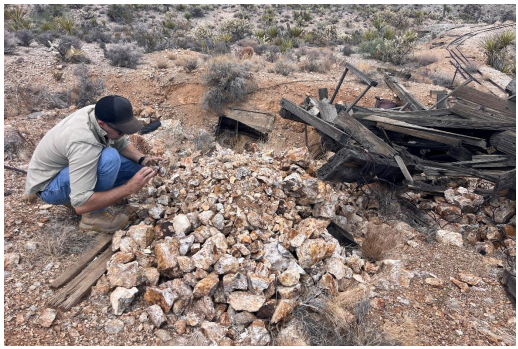
(Source)
Here is where the new mine shaft was discovered:
LKY also hosted a site visit
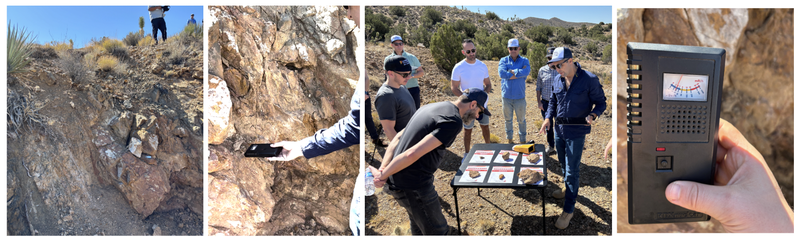
LKY also mentioned in today’s announcement that a site visit had been completed for brokers and analysts - which we actually attended.
For anyone who missed it we put out a short update from the site visit in our Sunday email here:
Here are some photos from the site visit:
What’s next for LKY?
Drilling (next quarter) 🔄
LKY expects drilling to start next quarter, with first results expected before the end of this year. (Source)
Right now LKY is waiting for its expanded Plan of Operations (“POO”) to be approved (which is LKY expanding the size of its currently permitted drill program).
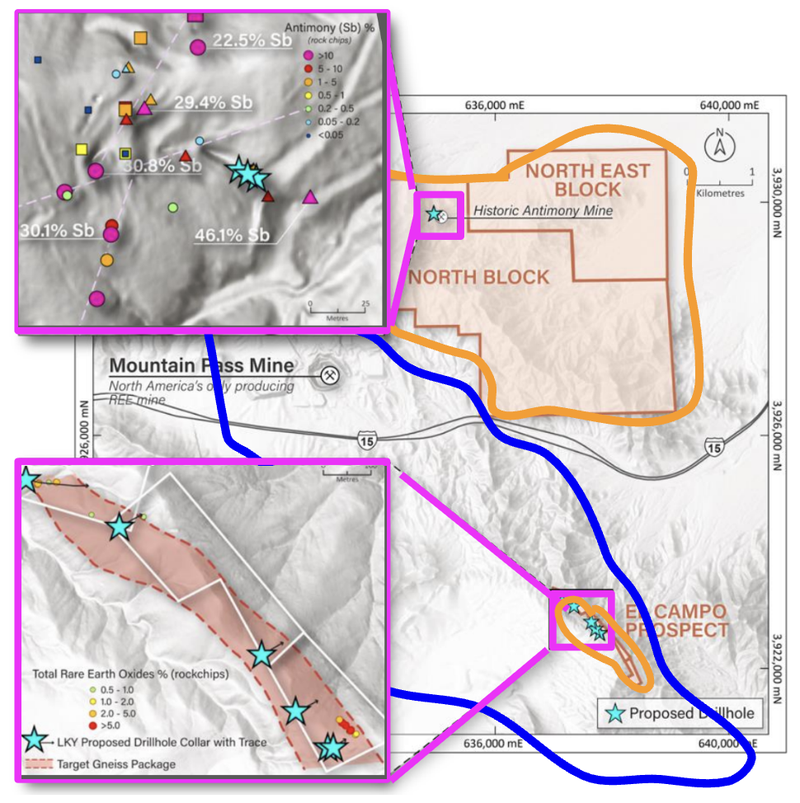
Here is where LKY’s initial drilling program is scheduled:
(Source)
With the rare earths drill program, LKY plans to test areas where a number of high grade rock chip samples were found, grading 1.20% to 6.87% TREO (rare earths).
With the antimony drill program, LKY plans to test for the extent of mineralisation near the historical antimony mine.
Over 24 surface samples 8 had over 17% antimony and 18 had over 1.4% antimony - these are very high grades for antimony projects.
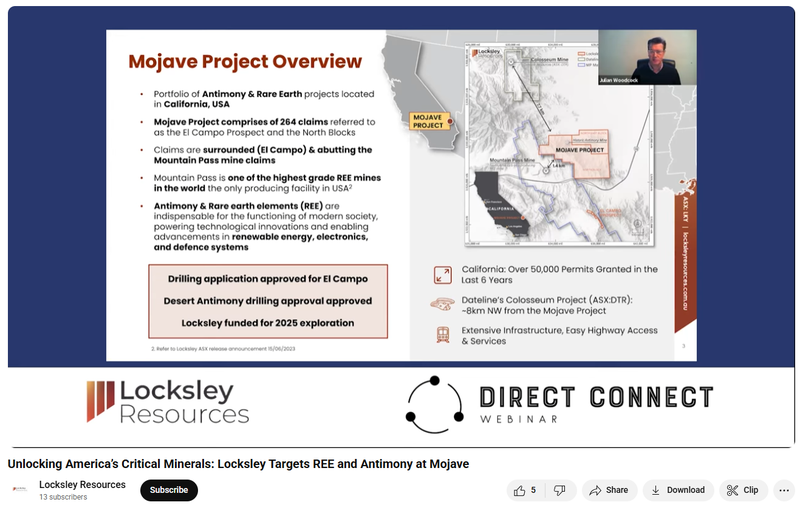
Here is a video of Julian Woodcock, Technical Director of LKY talking through LKY’s upcoming drilling plans:
Permitting for phase two drilling 🔄
LKY has lodged permits for an expanded Phase two drilling program on the North Block.
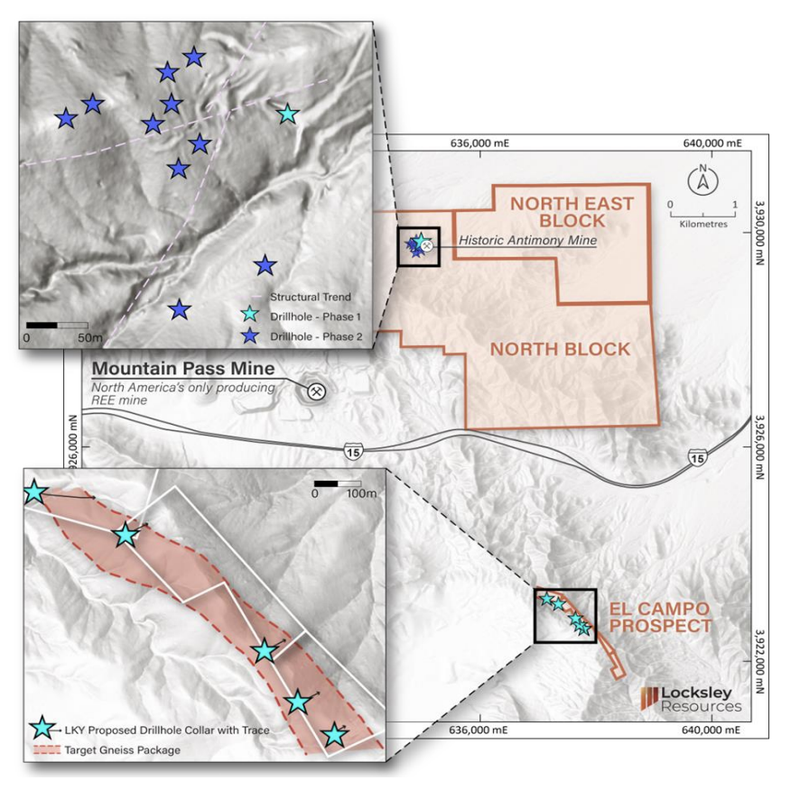
In the map below:
- Light blue stars = phase 1 drill program (fully permitted)
- Dark blue stars = phase 2 drill holes (permit pending)
Secure licence agreement with Rice University 🔄
Now that LKY has signed a partnership agreement with Rice University, the next stage will be to secure a larger licence deal over whatever technology is developed from the R&D agreement.
This will take some time to work out the IP sharing and mutual development of the technology.
Updates on potential funding opportunities🔄
With LKY’s appointment of GreenMet we would like to see progress on US funding pathways.
Identify rare earth targets on the northern blocks 🔄
LKY is now trying to work up some rare earth targets on the much larger blocks to the north, two of them as close as possible to MP Materials’ mine.
LKY will run structural and geological mapping, plus geophysics programmes on the areas shown above (we circled them in green).
Hopefully we get to see some nice looking rock chip samples as part of this field work too.